
What Happens After You Lose a Tooth? Your Options in Cuenca, Ecuador
Reviewed by Dr. Jorge Luis Vélez Barros, prosthodontist · November 25, 2026
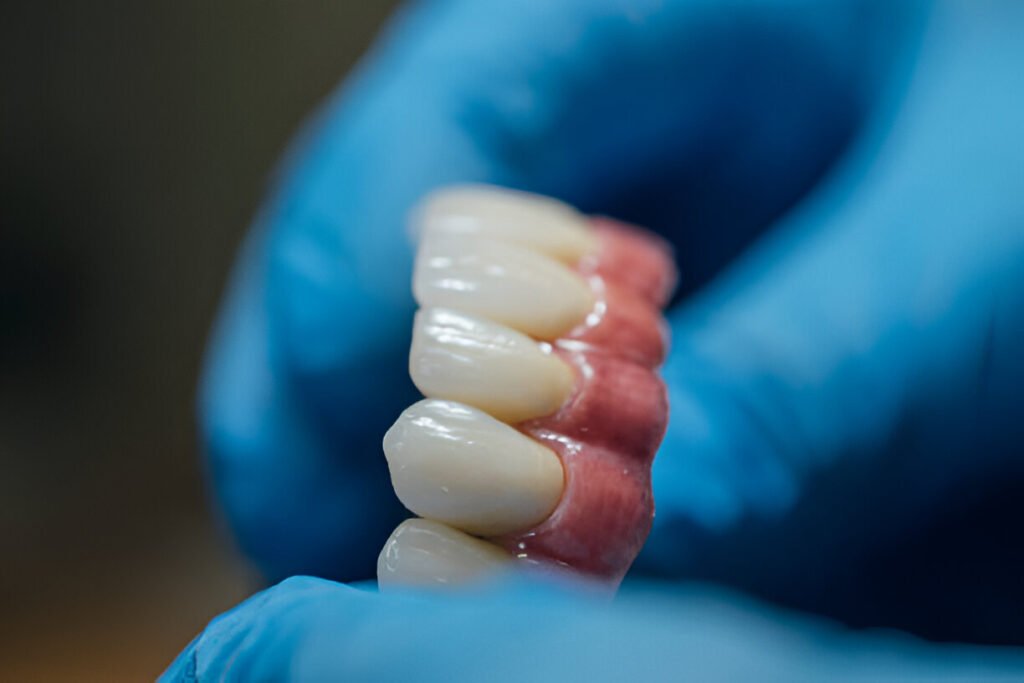
Many people leave a back tooth unreplaced because nobody sees the gap. It feels like a small problem. In practice, the mouth slowly adjusts to that empty space, and those changes are much easier to prevent than to fix. Here is what usually happens after you lose a tooth, and how the main options to replace it compare, explained by our team at Clínica Dental Oral Synergy in Cuenca, Ecuador.
What changes in the months after losing a tooth
- The neighboring teeth tilt. Without a tooth beside them, the teeth on each side slowly lean into the gap. Food gets trapped more easily and cleaning becomes harder.
- The opposite tooth moves. The tooth above or below the gap has nothing to bite against, so over time it can drift out of its socket.
- The bone shrinks. The bone that held the tooth no longer receives the pressure of chewing and gradually loses height and width. This can make an implant more complex later.
- Chewing shifts to one side. Many people start chewing on the other side without noticing, which puts extra load on those teeth and on the jaw joint.
Not every missing tooth needs treatment right away, but it is worth having it checked so you can decide with full information.
Your three main options to replace a missing tooth
1. Dental implant
A small post replaces the root, and a crown is placed on top. It does not touch the neighboring teeth and helps preserve the bone. It needs enough bone, so a CT scan is part of the planning. At Oral Synergy, a single implant with a zirconia crown starts from US$1,500. You can read what is included in our dental implant cost guide for Cuenca.
2. Fixed bridge
The teeth on each side of the gap are shaped to hold a three-piece bridge. It is fixed and relatively quick, but it requires reducing two teeth that may be perfectly healthy.
3. Removable partial denture
A plate that replaces one or several teeth and is taken out for cleaning. It is the most affordable option, but it moves more and some people find it uncomfortable for eating and speaking.
The right choice depends on your bone, the health of the neighboring teeth, your bite and your plans. That is why we always start with an evaluation and, when needed, a CT scan.
How we plan it at Oral Synergy
- A 60-minute evaluation with a specialist (USD 40).
- A digital scan of your teeth and, if needed, a CT scan at a partner imaging center.
- A clear written plan with each option and its cost before anything starts.
- Implant surgery with Dr. Juan Diego Coello, periodontist and implant surgeon, and the final restoration with Dr. Jorge Luis Vélez, prosthodontist trained at Universidad Complutense de Madrid.
Frequently asked questions
Is it too late if I lost the tooth years ago?
Usually not. If the bone has shrunk, there are ways to rebuild it or to plan around it. A CT scan shows what is possible in your case.
Does getting an implant hurt?
The procedure is done with local anesthesia. Most patients describe the following days as mild discomfort, manageable with regular pain relievers.
Can I pay in installments?
For implant treatments, you start with half and pay the rest in monthly installments.
Have a gap you have been putting off?
Send us a message on WhatsApp and we will explain your options calmly. Clínica Dental Oral Synergy is in Edificio Horizontes, Av. Unidad Nacional y Gran Colombia, Office 203, Cuenca, Ecuador. If you are new to Cuenca, you may also find useful our guide on how to choose an English-speaking dentist in Cuenca and our page for English-speaking patients.